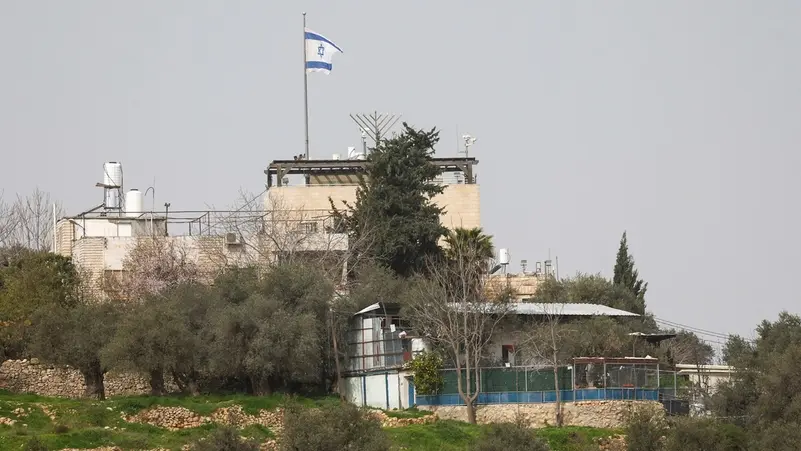
The White House has reaffirmed US President Donald Trump’s opposition to Israel’s annexation of the occupied West Bank, stressing that stability in the territory is critical for Israel’s security and broader regional peace efforts.
A White House official said on Monday that maintaining a stable West Bank aligns with the Trump administration’s goal of achieving lasting peace in the Middle East. The statement comes amid growing international concern over Israel’s recent steps to expand control over Palestinian territories.
On Sunday, Israel’s security cabinet approved a set of measures aimed at deepening Israeli authority in the West Bank. The decision is expected to pave the way for further settlement expansion in occupied Palestinian areas.
The measures were announced by Israel’s Finance Minister Bezalel Smotrich and Defense Minister Israel Katz. According to their joint statement, long-standing regulations preventing Jewish citizens from purchasing land in the West Bank would be removed.
In addition, the reforms include transferring authority over settlement construction permits in parts of Palestinian cities — including Hebron — from Palestinian municipal bodies to Israeli control. Critics argue that such steps undermine the role of the Palestinian Authority and alter the legal and administrative status of the territory.
The Israeli decision has drawn strong condemnation from regional and international actors. On Monday, the foreign ministers of Saudi Arabia, Jordan, the United Arab Emirates, Qatar, Indonesia, Pakistan, Egypt, and Turkey issued a joint statement rejecting the measures.
The ministers condemned what they described as illegal Israeli actions aimed at imposing unlawful sovereignty, expanding settlements, and reshaping governance structures in the occupied West Bank. They warned that these steps threaten regional stability and violate international law.
The West Bank remains a central issue in the Israeli-Palestinian conflict, and annexation efforts have long been viewed as a major obstacle to peace negotiations. The renewed US opposition highlights Washington’s concern that unilateral actions could further inflame tensions across the Middle East.
Recommended Stories: