US President Donald Trump said early Sunday that the United States and Israel would hold off on launching new strikes against Iran while negotiators pursue a rapid agreement aimed at ending the months-long conflict.
The announcement offers a possible opening for diplomacy after days of renewed fears that the regional fighting could intensify. However, the pause is conditional rather than permanent, and major differences between the parties remain unresolved.
Strike pause depends on a quick agreement
In a post on Truth Social, Trump said Iran and several Middle Eastern countries had asked Washington to delay further military action while efforts to reach an agreement continued. He said the United States was prepared to act but had agreed to suspend the planned attack, provided a deal could be completed rapidly.
Trump said Israel supported the decision to give negotiations more time. His statement followed earlier warnings that Iran could face a strong US response and reports that Washington and Israel had considered another round of attacks, potentially involving energy-related targets.
Those reported plans were not publicly confirmed in full by US or Israeli officials, and the latest announcement indicates that immediate military action has, for now, been placed on hold.
Strait of Hormuz and nuclear issue at center of talks
According to Trump, any agreement must include the full reopening of the Strait of Hormuz and steps to end what he described as Iran’s nuclear threat.
The Strait of Hormuz is one of the world’s most important energy shipping routes, connecting the Persian Gulf with the Gulf of Oman. Disruption in the waterway can affect oil and gas supplies, freight costs and global energy prices.
Commercial traffic through the strait has reportedly fallen sharply during the conflict. Maritime incidents near Oman and at regional ports have added to concerns about the safety of vessels operating in and around the Gulf.
Regional governments push to prevent wider escalation
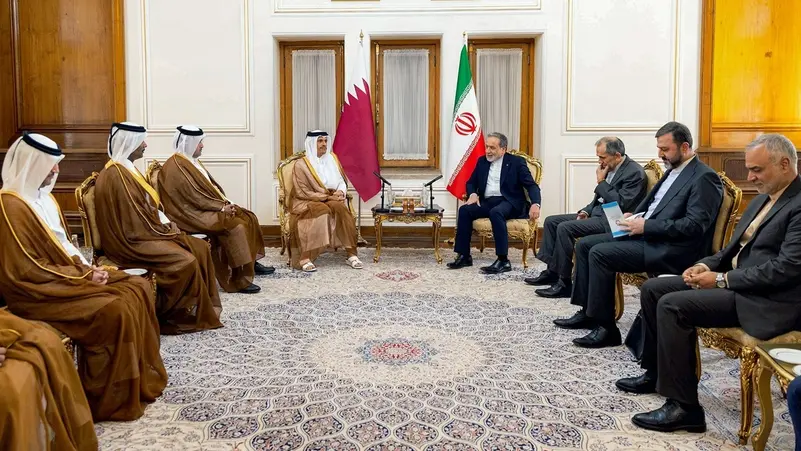
Trump said his decision followed requests from Iran and other regional countries. Gulf governments have strong reasons to oppose a broader military confrontation, as any expansion of the war could threaten energy facilities, shipping lanes and civilian infrastructure across the Middle East.
US embassies in several regional capitals had also issued security warnings, urging American citizens to prepare for possible travel disruption or an unexpected escalation.
The latest pause may reduce the immediate risk of further attacks, but it does not by itself amount to a ceasefire or a final peace agreement. Negotiators must still convert the reported outline into clear terms acceptable to the countries involved.
Previous ceasefire efforts have failed
The conflict began on February 28 with US and Israeli strikes on Iran, followed by Iranian missile and drone attacks in the region. Fighting has continued for more than five months, despite repeated diplomatic efforts and temporary pauses.
An earlier ceasefire arrangement, which also involved the reopening of the Strait of Hormuz, later collapsed. That history raises questions about how a new agreement would be monitored and enforced, and what would happen if either side alleged a violation.
Iran had not publicly confirmed a final agreement at the time of the initial reports about Trump’s announcement. Its official response will therefore be important in determining whether the latest diplomatic effort can produce a lasting reduction in hostilities.
Markets and shipping remain sensitive
The renewed exchange of attacks in recent weeks has increased concern in global energy markets. Oil prices, which had eased during an earlier lull, rose again as uncertainty returned to the region.
A successful agreement could reduce risks to shipping and energy supplies. Failure, however, could revive the possibility of US-Israeli strikes, Iranian retaliation and further disruption around the Strait of Hormuz.
For now, Trump’s statement marks a pause in military action and a narrow opportunity for diplomacy. The decisive question is whether negotiators can quickly agree on verifiable terms covering navigation through Hormuz, Iran’s nuclear activities and a broader end to the fighting.