Iran and Oman are continuing negotiations over an agreement concerning the Strait of Hormuz, despite earlier claims that the two countries had settled key issues involving control of the waterway and its revenues.
A senior Iranian source said on Wednesday that the agreement had not yet been finalised and that discussions were continuing over its details.
The clarification came after Iran’s Islamic Revolutionary Guard Corps said Tehran and Muscat had reached understandings acceptable to both sides.
IRGC Claims Progress on Control and Revenues
IRGC spokesperson Hossein Mohebbi said Iran and Oman had been negotiating for approximately one month over arrangements for the strategically important waterway.
According to Mohebbi, the discussions produced understandings concerning each country’s share of the Strait’s waters and any revenues generated under a future management arrangement.
However, it remains unclear whether these understandings constitute a complete agreement or only progress on specific elements of a wider accord.
The senior Iranian source maintained that negotiations were still underway and that no final deal had been concluded.
Oman Hopes to Establish a Temporary Corridor
Omani Foreign Minister Badr al-Busaidi expressed hope that the two countries would soon announce a temporary corridor through the Strait of Hormuz.
The proposed arrangement is intended to restore safe navigation while Iran and Oman continue working toward a broader and more permanent settlement.
Establishing such a corridor could allow some commercial vessels to resume operations through the waterway under agreed security and traffic-management measures.
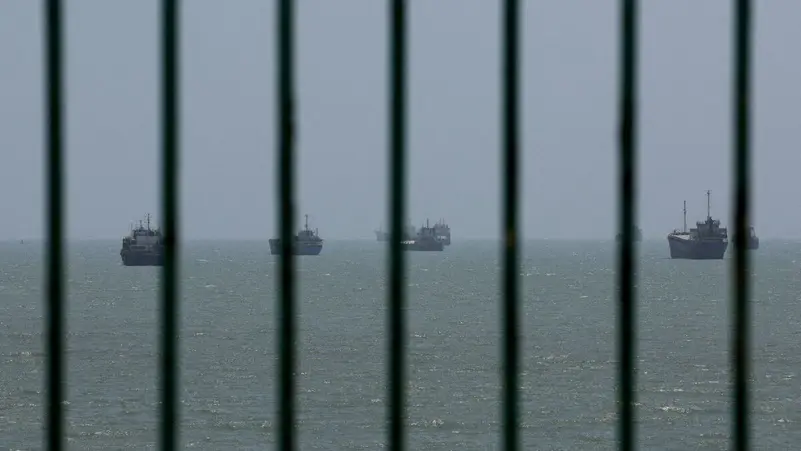
Before the conflict began in February, approximately one-fifth of global oil and liquefied natural gas shipments passed through the Strait of Hormuz. The sharp reduction in maritime traffic has disrupted energy supplies and contributed to higher global prices.
Iran Links Reopening to US Conditions
Iran maintains that the Strait will not reopen fully unless the United States complies with Tehran’s conditions under an interim ceasefire agreement reached in June but later abandoned.
Those conditions reportedly include ending the US blockade of Iranian ports, removing economic sanctions and providing compensation for damage caused during the conflict.
The IRGC accused Washington of obstructing negotiations between Iran and Oman, claiming that American involvement had delayed an agreement.
Mohebbi said Iran could reopen the waterway within an agreed framework if the United States stopped interfering and returned to the previous understanding. He warned that Tehran would otherwise refuse to reopen the Strait.
Maritime Passage Remains Dangerous
Although direct fighting between Iran and the United States has decreased in recent weeks, attacks on commercial vessels have continued to make navigation through the Strait dangerous.
Diplomatic attempts to establish a broader peace agreement have also stalled, leaving maritime operators uncertain about when normal shipping may resume.
Iran and the United States have attempted to exercise control over the route through separate blockades, further restricting commercial traffic.
Washington Turns to Economic Pressure
The United States has indicated that it intends to increase economic pressure on Tehran while avoiding new military strikes for the time being.
Washington has threatened measures against countries continuing to conduct business with Iran, although immediate penalties have not been announced.
Iran has condemned the campaign as unlawful and expressed confidence that several countries will resist American pressure.
Reports of renewed mediation efforts and possible progress in the Iran–Oman negotiations contributed to a decline in oil prices. However, the absence of a final agreement means uncertainty surrounding the waterway remains high.
A successful accord could restore part of the shipping traffic and reduce pressure on international energy markets. For now, Iran and Oman still need to resolve important questions concerning safe navigation, control of the waterway and the distribution of potential revenues.