Key Points
- Fordow, Natanz, and Esfahan nuclear facilities targeted in a US strike intended to “destroy or severely degrade” Iran’s nuclear program.
- The operation included the first operational use of the GBU-57 Massive Ordnance Penetrator (MOP).
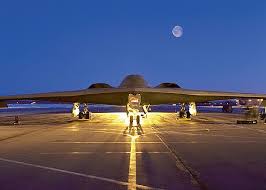
On 21 June, the United States conducted precision strikes on critical Iranian nuclear sites, including the fortified Fordow facility, the larger enrichment plant at Natanz, and the uranium conversion plant at Esfahan. The strike involved both aerial and sea-based components, with B-2 Spirit bombers deploying the 30,000 lb GBU-57 MOP for the first time in an operational mission.
Just after midnight on 21 June, B-2 bombers departed from the continental US for the operation, code-named ‘Midnight Hammer’. The mission also included a decoy strike package flying west over the Pacific to obscure the main strike heading east toward Iran, according to US defense officials.
Operation ‘Midnight Hammer’ Strikes Iran
Seven B-2 Spirit bombers, flying east from the US, formed the primary strike package for Operation ‘Midnight Hammer’, targeting Iran’s nuclear infrastructure. A second group of B-2s flew west over the Pacific as a decoy mission.
The US Secretary of Defense, Pete Hegseth, stated that the operation aimed to “destroy or severely degrade” Iran’s nuclear program, focusing specifically on the Fordow, Natanz, and Esfahan facilities. He emphasized that the mission did not target Iranian troops or civilians, and its scope was intentionally limited, with the hope that Iran would pursue negotiated peace.
Iran’s Ministry of Foreign Affairs confirmed the strikes and condemned the US action as military aggression against its peaceful nuclear sites.
Battle damage assessment is ongoing, according to Chairman of the Joint Chiefs of Staff, General Dan Caine, who noted that it is too early to determine the full extent of the impact.
Strike Details
After departing the US, the main strike package of seven B-2 Spirit bombers, each with a two-member crew, flew quietly eastward with minimal communications and completed multiple in-flight refuellings during the 18-hour journey.
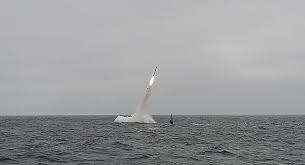
Upon reaching the target area, the B-2s linked with escort and support aircraft. Around 5:00 pm EST on 21 June, just before entering Iranian airspace, a US submarine launched more than two dozen Tomahawk Land Attack Missiles (TLAMs) against key surface infrastructure at Esfahan, adding to the precision strike.
Precision Strikes and Tactics in Operation ‘Midnight Hammer’
When the US strike package entered Iranian airspace, several deception tactics were employed to protect the bombers, according to General Dan Caine. Decoy aircraft, including fourth- and fifth-generation jets, flew ahead of the B-2 bombers at high altitude and speed to divert enemy fighters and surface-to-air missile threats.
As the bombers neared Fordow and Natanz, a protection package used high-speed suppression weapons to ensure safe passage. Fighter aircraft conducted pre-emptive strikes to neutralize any potential surface-to-air threats. No hostile fire was reported, and Iranian aircraft did not attempt an interception.
Strike Execution
At approximately 6:40 pm EST, the lead B-2 released two GBU-57 Massive Ordnance Penetrators (MOPs) on initial targets at Fordow. The remaining bombers struck their respective targets, with a total of 14 MOPs deployed across two nuclear target areas. All three Iranian nuclear facilities – Fordow, Natanz, and Esfahan – were hit between 6:40 pm and 7:05 pm EST. The Tomahawk Land Attack Missiles (TLAMs) were the final strikes, targeting Esfahan to maintain the element of surprise throughout the operation.
GBU-57 MOP
In total, US forces deployed approximately 75 precision-guided munitions, including 14 MOPs. The GBU-57 MOP is a GPS-guided, large penetrating bomb designed for fortified targets. While exact stockpile numbers are classified, the US Air Force originally contracted 20 MOPs in 2009, which have since undergone modifications for operational use.